SAP
Industry 5.0 and SAP: How Human-Centric Manufacturing Is Redefining Technology Skills
Share


 13 Oct, 2026
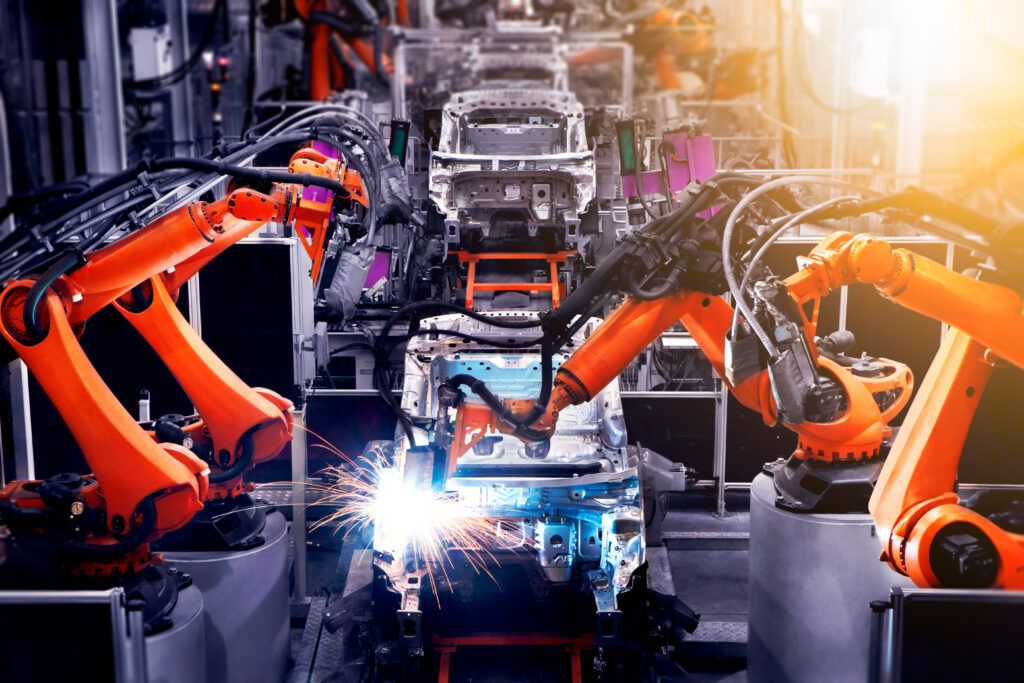
Manufacturing has spent the past decade building levels of automation to connect assets, digitise workflows and embed intelligence into production environments. Industry 5.0 builds on that foundation, but shifts the emphasis. The next phase of industrial transformation is about designing operating models in which automation, artificial intelligence and human expertise work together and reinforce one another.
For manufacturers running SAP, that has far-reaching implications for technology architecture, workforce design and the capabilities required to turn increasingly sophisticated systems into measurable operational value.
Jump To:
- What Is Industry 5.0 and How Does It Differ from Industry 4.0?
- Why Human-Machine Collaboration Is So Important
- Where SAP Fits into Industry 5.0
- Where Manufacturing Technology Skills Are Converging
- Recruiting for the Industry 5.0 Manufacturing Environment
- Building the Skills Strategy Before Demand Peaks
What Is Industry 5.0 and How Does It Differ from Industry 4.0?
Industry 4.0 established the technological foundations of connected manufacturing through IoT, cloud infrastructure, automation, advanced analytics and increasingly autonomous systems. Industry 5.0 extends those capabilities by placing greater emphasis on human-centricity, resilience and sustainable value creation.
The intention is deploy automation more intelligently and manufacturers are increasingly assessing where automation can amplify human judgement, creativity and contextual expertise.
That shift is already taking place at scale. Rockwell Automation reports that 59% of manufacturers are already using smart manufacturing, underlining how firmly connected technologies have moved into mainstream operations.
Why Human-Machine Collaboration Is So Important
The factory of the future will not be characterised by people and machines operating in isolation. Instead, competitiveness will come from how effectively the relationship between the two is orchestrated.
Industrial robotics already performs repetitive, hazardous and precision-intensive tasks across manufacturing environments. AI adds another layer of capability by identifying patterns, optimising parameters, predicting equipment failure and increasingly recommending or initiating operational responses.
34% of manufacturing operations are AI-augmented today, with that figure expected to rise to 54% by 2030. Discussions around AI robotics and the future of jobs need to be centred on how accountability, decision-making and role design will evolve as intelligent systems become embedded across production.
Industry 5.0 requires employees to understand, trust and act on the outputs of increasingly autonomous systems. That means that organisational design and change capability are as important as technical deployment. Without them, even well-designed technology estates can fail to deliver their intended value.
Where SAP Fits into Industry 5.0
For SAP-led manufacturers, the opportunity lies in connecting shop-floor intelligence with enterprise processes rather than creating another layer of disconnected technology.
- SAP S/4HANA Manufacturing provides the transactional and planning backbone across production, materials, quality, maintenance and supply chain.
- SAP Digital Manufacturing extends that capability closer to the factory floor, enabling production operations to connect more directly with enterprise systems.
- SAP Business Technology Platform (BTP) adds an important integration and innovation layer. Its capabilities allow manufacturers to connect SAP environments with operational technologies, manufacturing applications and external platforms.
- SAP Analytics Cloud brings planning, predictive insight and performance data into the same decision environment, enabling manufacturing and transformation leaders to assess what is happening operationally, what is likely to happen next and where intervention will create the greatest value.
The advantage of SAP in industrial automation and robotics is the ability to connect physical operations, enterprise data and business decision-making. That is central to Industry 5.0.
Where Manufacturing Technology Skills Are Converging
Industry 5.0 cannot be treated purely as an engineering or IT initiative. Manufacturers still require deep specialists, but those specialists also need to understand how their domain interacts with adjacent technologies, data flows and business processes.
As development, automation and analytics move closer to the business, the value of professionals who can combine technical expertise with process understanding and commercial judgement rises considerably.
AI is also impacting how manufacturers approach automation software. McKinsey reports that 27% of advanced manufacturing organisations have decided against purchasing at least one software product or feature because they were able to build the functionality in-house using agentic coding tools.
Recruiting for the Industry 5.0 Manufacturing Environment
Demand is centred on professionals who can connect physical operations with enterprise technology. Depending on the organisation and programme, that can include:
- SAP manufacturing consultants with expertise across production planning, quality, plant maintenance, supply chain and manufacturing execution.
- Solution architects able to translate manufacturing strategy into integrated SAP, data and operational technology architectures.
- Integration specialists connecting SAP S/4HANA, SAP BTP, manufacturing platforms, data environments and third-party systems.
- Automation engineers who understand how robotics and process automation fit within wider production and enterprise workflows.
- Data and analytics professionals capable of translating manufacturing data into predictions, decisions and measurable operational improvements.
- Transformation and change leaders who can align technology deployment with process redesign, workforce adoption and business outcomes.
These capabilities rarely fit neatly within conventional role definitions. AI and automation are expanding roles rather than eliminating them, and employers are prioritising cross-functional expertise. It is important to identify these hybrid profiles early. Once a specific combination of skills becomes an established market requirement, competition for experienced professionals usually intensifies quickly.
Building the Skills Strategy Before Demand Peaks
The implication is that workforce planning needs to move upstream in the transformation process. Strong organisations are unlikely to wait until implementation begins before defining the skills they need. Instead, they will connect technology roadmaps with capability planning early enough to build, buy or borrow expertise before demand becomes acute.
A practical starting point is to focus on five areas.
- Mapping Future-State Processes
Skills planning should begin with your operating model. Identify where SAP, AI, automation, analytics and robotics will materially change how work is performed, how decisions are made and where accountability sits. This creates a clearer view of the capabilities required to run the future process, rather than the technical expertise required to configure the system.
- Identifying Interfaces Where Skills are Scarce
Scarcity often appears at the intersection of disciplines. Pay attention to roles that connect SAP with manufacturing execution, operational technology, industrial automation, AI, data platforms and analytics. These are areas where demand can outpace supply because employers are looking for depth in one discipline and fluency in several others. - Segmenting Capability to Avoid Reactive Hiring
Not every skill should be sourced in the same way. Core capabilities that support long-term ownership and continuous improvement justify permanent investment. Scarce technical expertise for defined transformation phases is better accessed through experienced contractors or project specialists. Other capabilities can be developed internally through structured upskilling. - Redesigning Role Profiles Around Outcomes
Traditional job descriptions are restrictive in an Industry 5.0 environment. Rather than over-indexing on a narrow list of platforms or certifications, define the outcomes a role needs to deliver. This makes it easier to identify candidates with transferable expertise who can deliver value. - Build Talent Pipelines Early
The most difficult time to establish a specialist talent network is when a critical programme is already under delivery pressure. Reduce that risk by identifying priority skills against their SAP and automation roadmap, benchmarking availability and compensation, and building relationships with relevant talent communities well ahead of implementation phases.
Industry 5.0 is operational reality and to capture its value manufacturers need to develop their technology architecture and talent strategy in parallel. For more than 18 years, Whitehall has worked across SAP, IT and data markets, giving us a detailed view of how emerging technologies translate into changing skill requirements.
Access specialist talent aligned precisely to your technology, operational and transformation goals. Contact Whitehall today.
About the Author
Whitehall Resources is a global SAP recruitment agency. Thanks to our curated and expansive network of seasoned SAP candidates, we can help find you the specialist professionals you need to support your SAP projects. Find out more about our services.